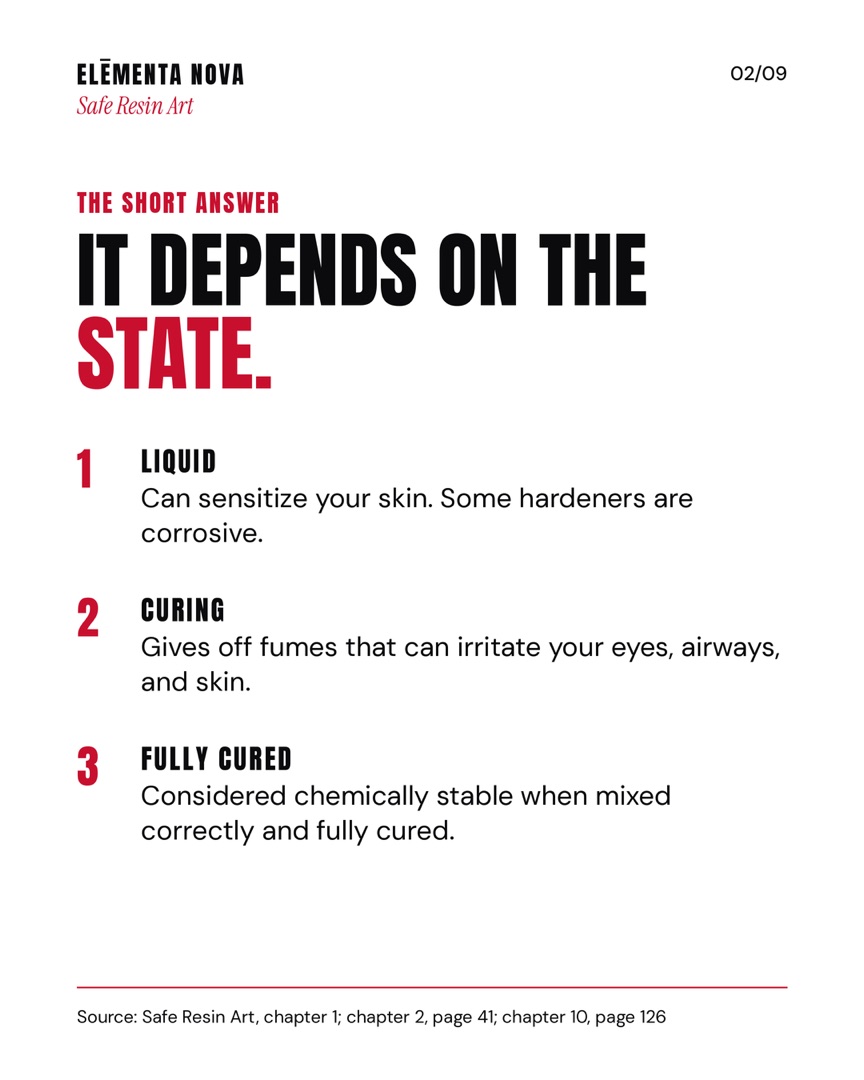
Is epoxy resin toxic? It depends on its state: liquid, while it cures, or fully cured.
I'm Natalie Pikul, author of Safe Resin Art, and in the book I keep these three states apart.
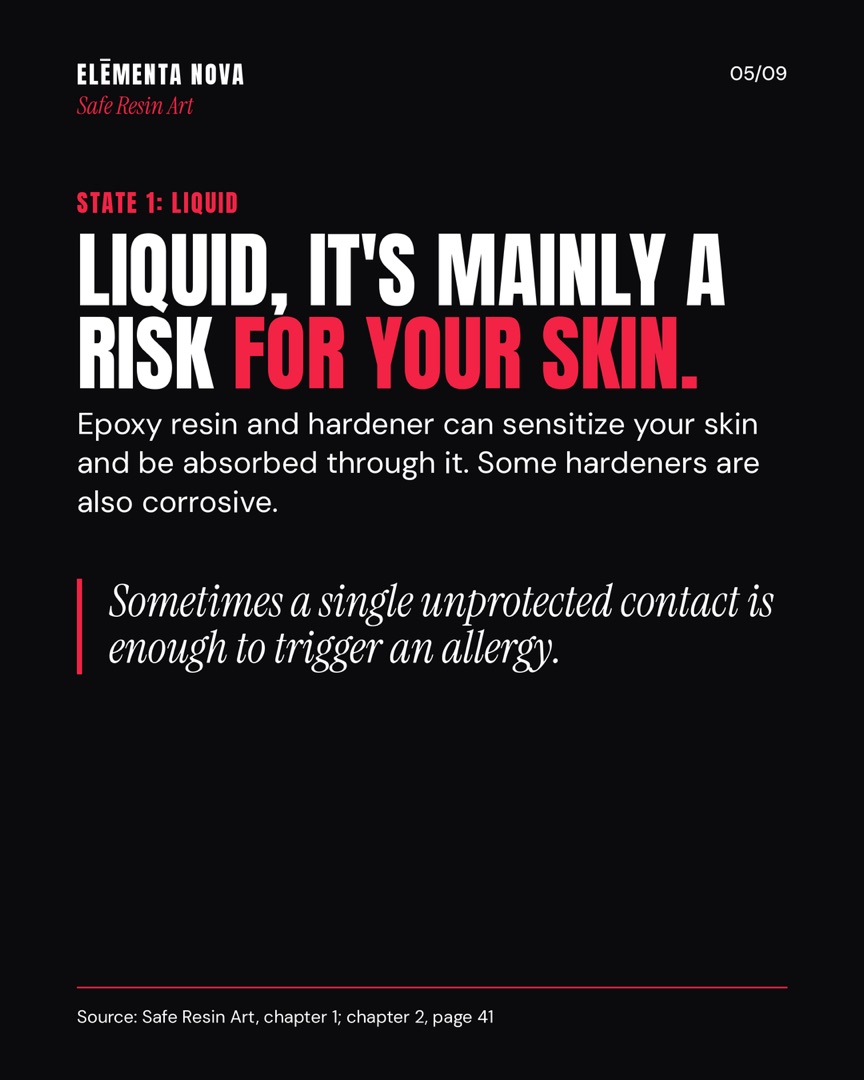
Liquid: Many components of epoxy resin and hardener can sensitize your skin and be absorbed through it. Some hardeners are also corrosive. Sometimes a single unprotected contact is enough to trigger an allergy.
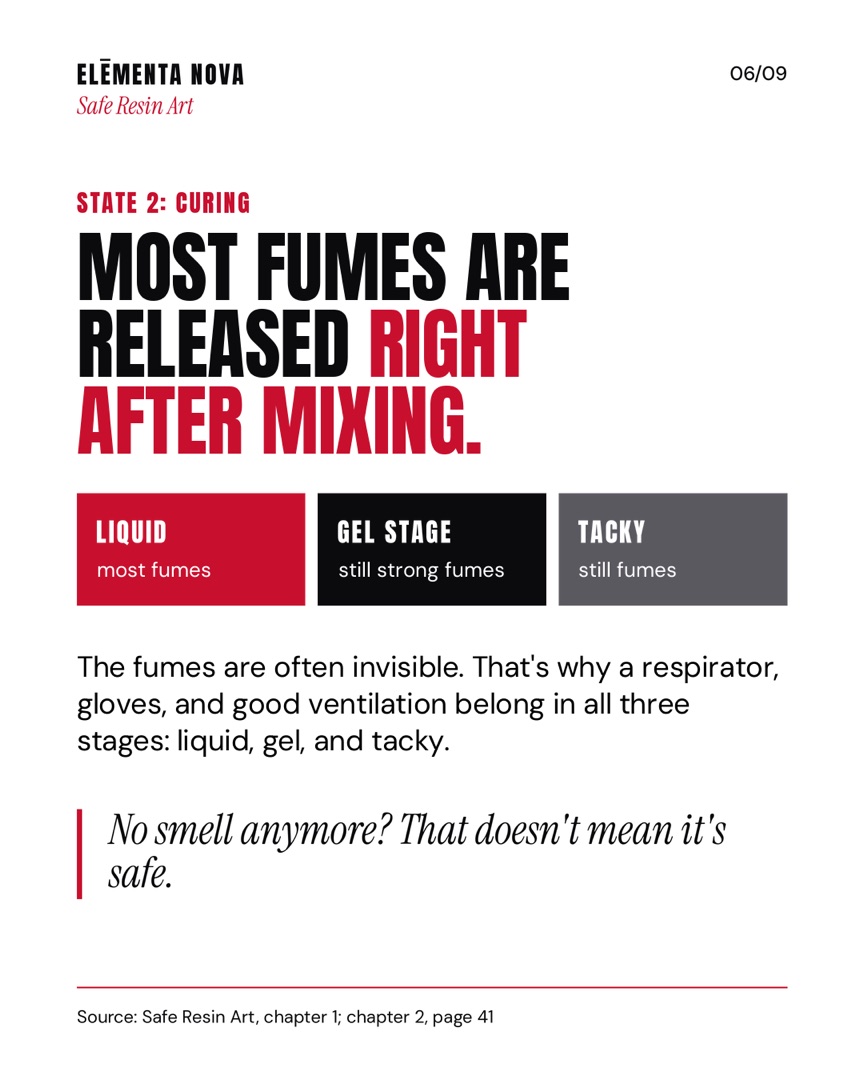
While it cures: As soon as epoxy resin and hardener react, they produce heat and fumes. Fumes peak right after mixing, while the epoxy resin is still liquid. There are still a lot of fumes in the gel stage, and in the tacky stage, the material keeps reacting and giving off fumes. The fumes are often invisible and can irritate your eyes, airways, and skin.
No smell anymore? That doesn't mean it's safe. The smell is often gone after one or two hours, but the substances stay active much longer.
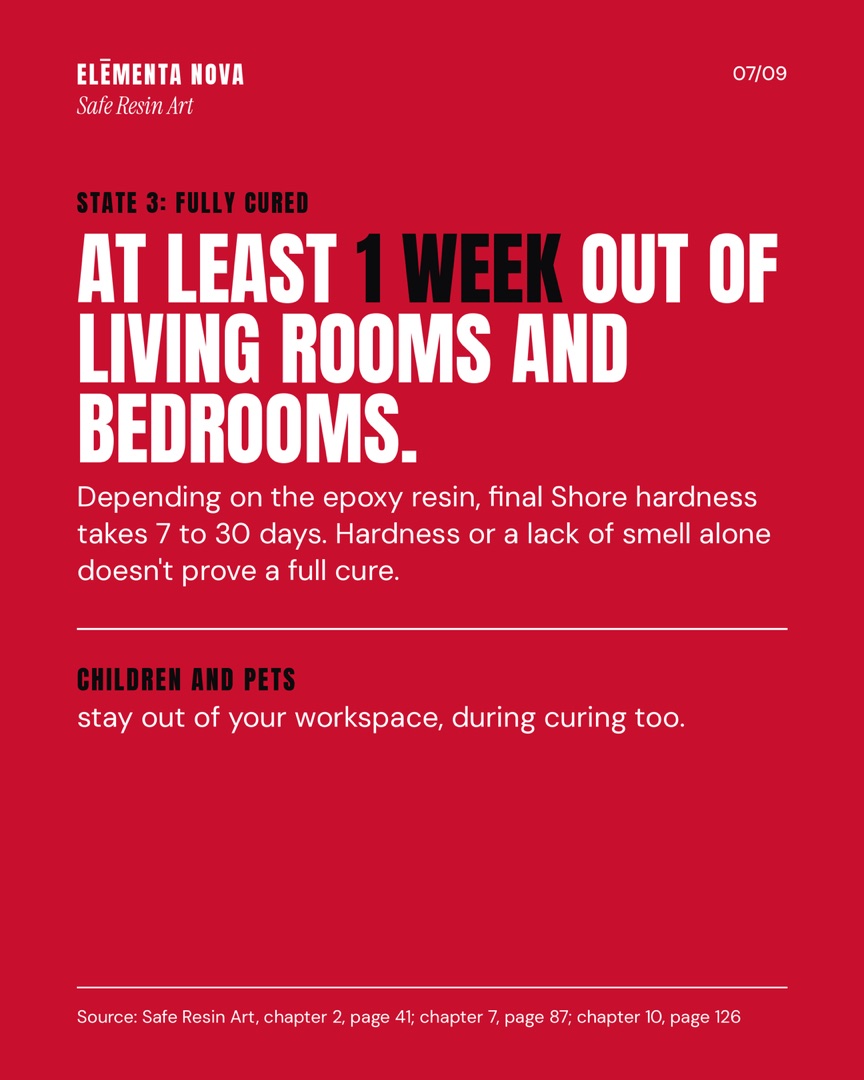
Fully cured: Correctly mixed and fully cured, epoxy resin is considered chemically stable. But a full cure takes days to weeks, not hours. That's why you keep a freshly poured piece out of living rooms and bedrooms for at least a week, even if it already feels solid. Hardness or a lack of smell alone doesn't prove a full cure.
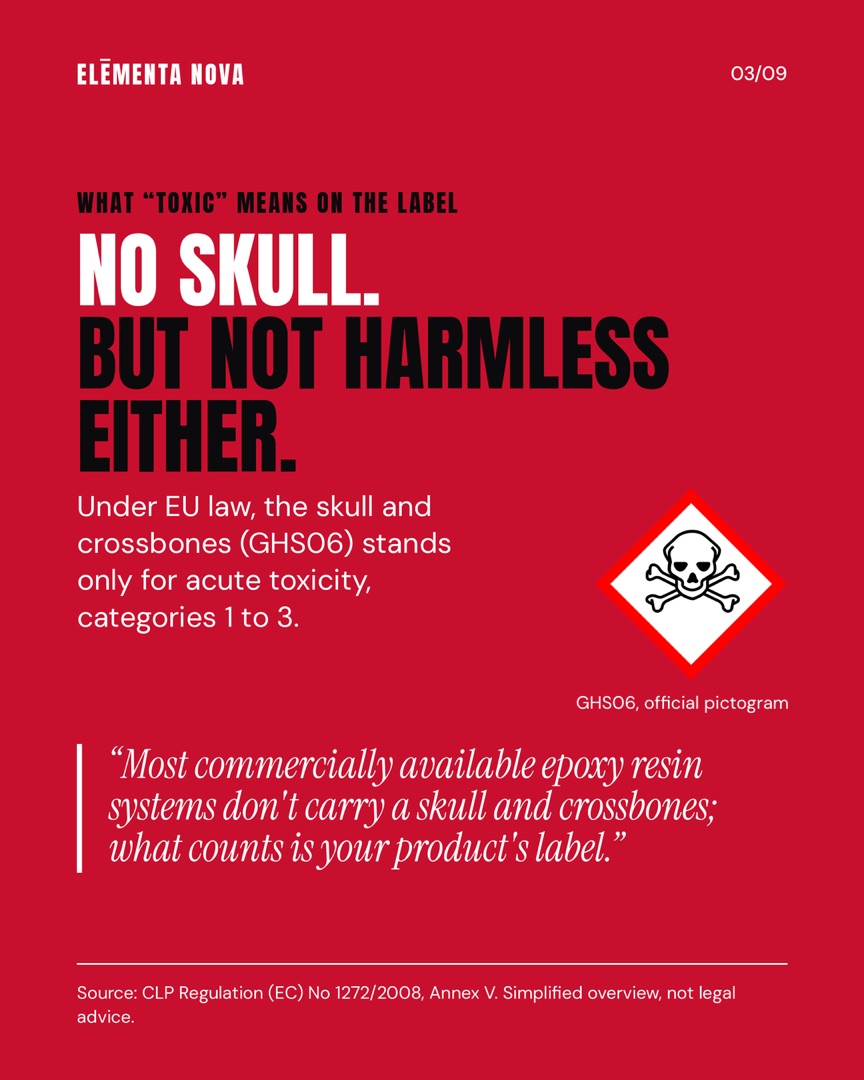
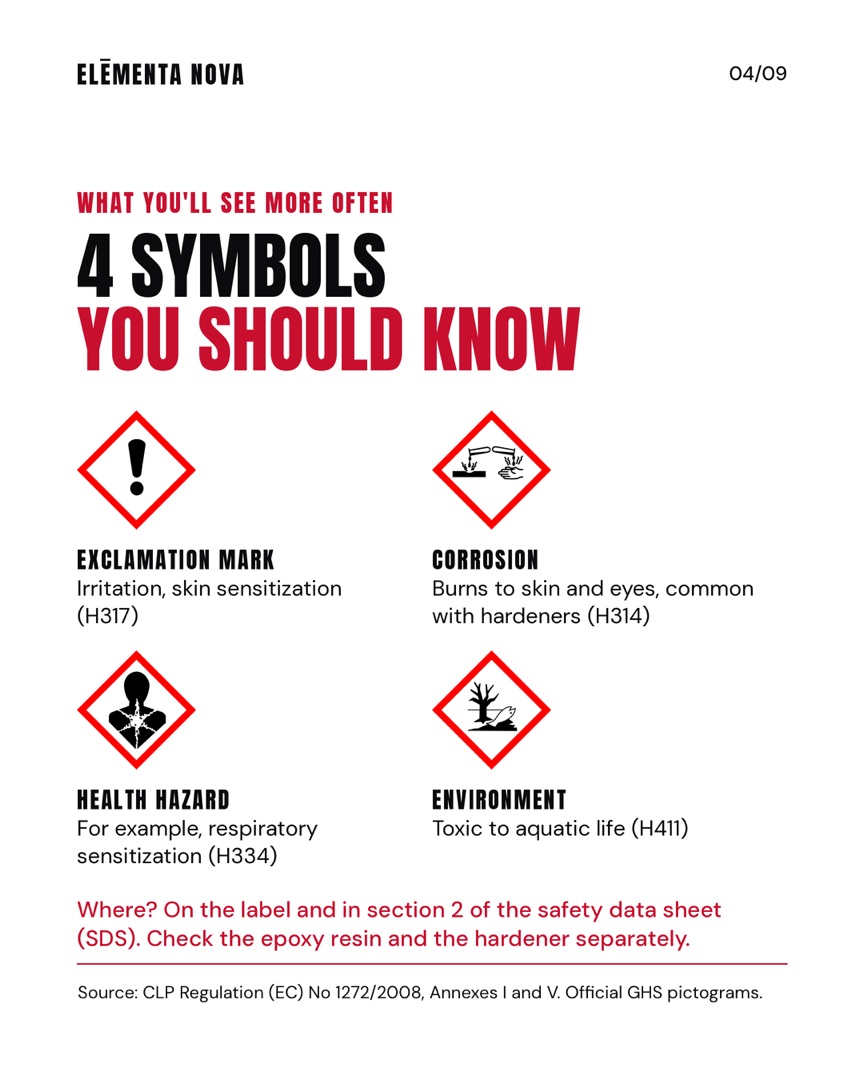
And what does "toxic" mean on the label? Under the EU CLP Regulation, the skull and crossbones (GHS06) stands only for acute toxicity, categories 1 to 3. Most commercially available epoxy resin systems don't carry a skull and crossbones; what counts is your product's label. Instead, you'll often see the exclamation mark, for example for skin sensitization, and on many hardeners the corrosion symbol. No skull doesn't mean harmless.
Children and pets stay out of your workspace, during curing too.
Source: Safe Resin Art, chapters 1, 2, 7, 9, and 10. I explain the hazard symbols based on CLP Regulation (EC) No 1272/2008. Your product's safety data sheet always comes first.
Bookmark this article for your next pour, so you know how long your piece needs to air out.
Check the label on your epoxy resin right now: Which hazard symbol is on it?
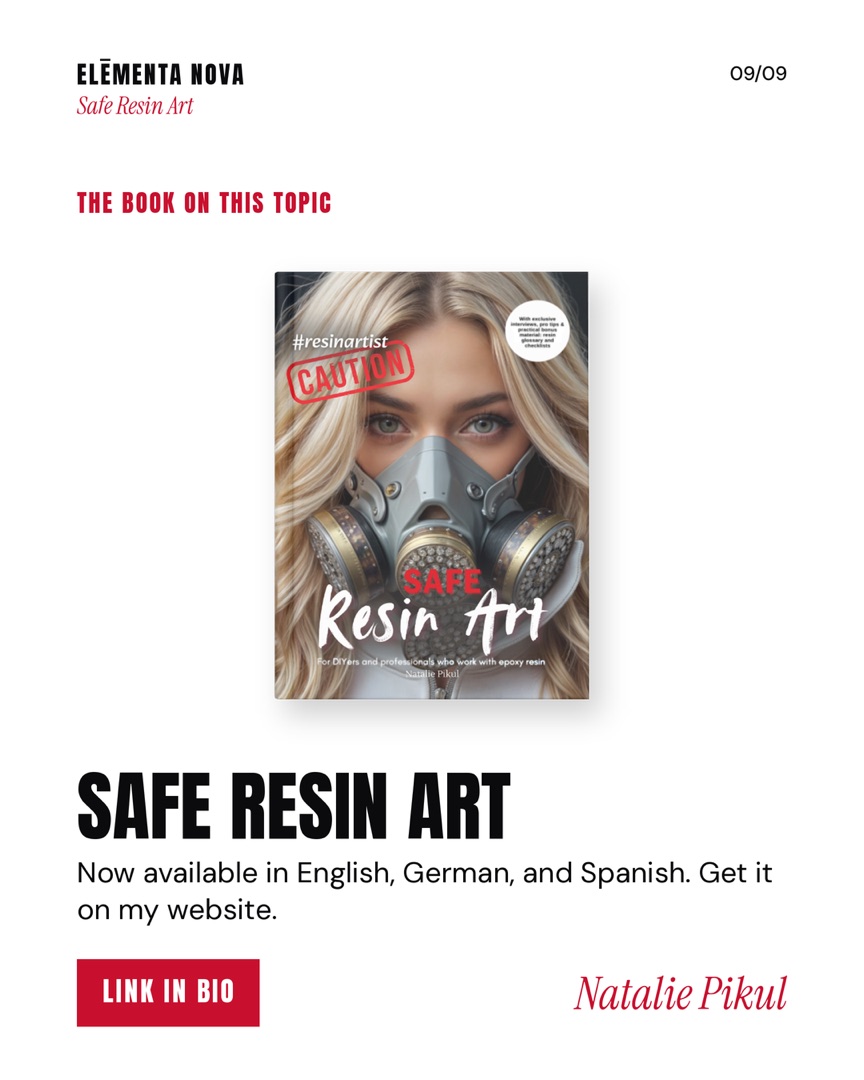
Safe Resin Art is available in English, German, and Spanish. Go to the book: Safe Resin Art.
Natalie Pikul
- Hazard symbols
- Epoxy resin safety
Go to the book: Safe Resin Art · Go to Epoxy Resin Knowledge