What does "toxic" mean for epoxy resin?
In everyday speech, “toxic” simply means harmful to your health. In hazard law, the word has a narrow, fixed meaning. In the EU, the CLP Regulation (EC) No 1272/2008 sets out how hazardous substances are labeled. There, the Skull and Crossbones pictogram (GHS06) stands only for acute toxicity in categories 1, 2, and 3, whether swallowed, through the skin, or inhaled. The signal word is then always “Danger.”
Common epoxy resin and hardener components usually don’t carry this symbol. Most commercially available epoxy resin systems don’t carry a skull and crossbones; what counts is your product’s label.
A missing skull and crossbones still isn’t a free pass. Epoxy resin systems are often irritating, sensitizing, and, depending on the hardener, corrosive. That’s why you need protective equipment. There’s no blanket statement that covers every product: your product’s label and safety data sheet (SDS) decide which classification applies.
Which hazard pictograms appear on epoxy resin and hardener?
On epoxy resin systems, you’ll mostly come across these hazard pictograms:
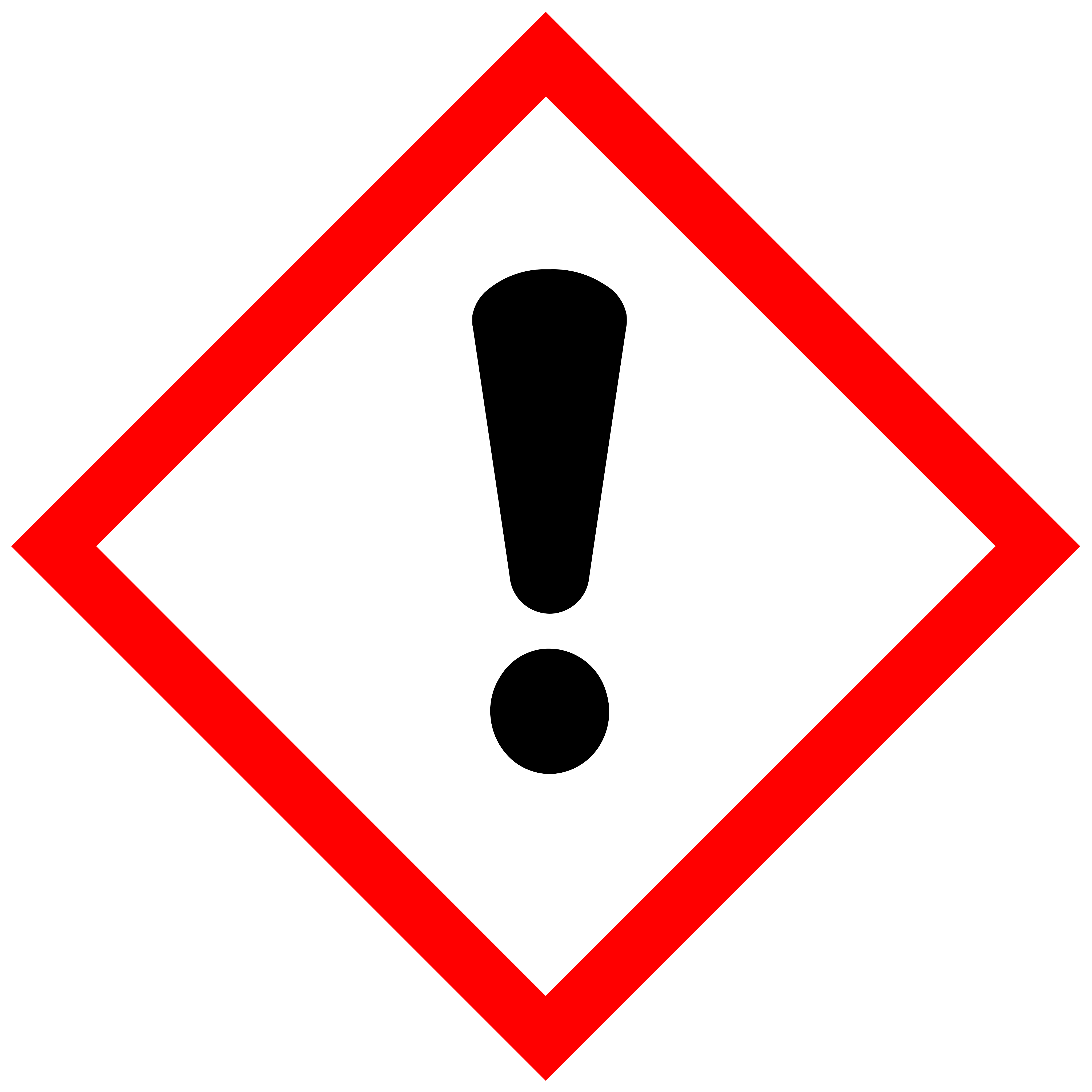 Exclamation Mark (GHS07): stands for skin irritation, eye irritation, and skin sensitization, among other things. The matching hazard statement H317 reads: May cause an allergic skin reaction. The signal word is “Warning.” For you, this means: avoid skin contact and wear suitable gloves.
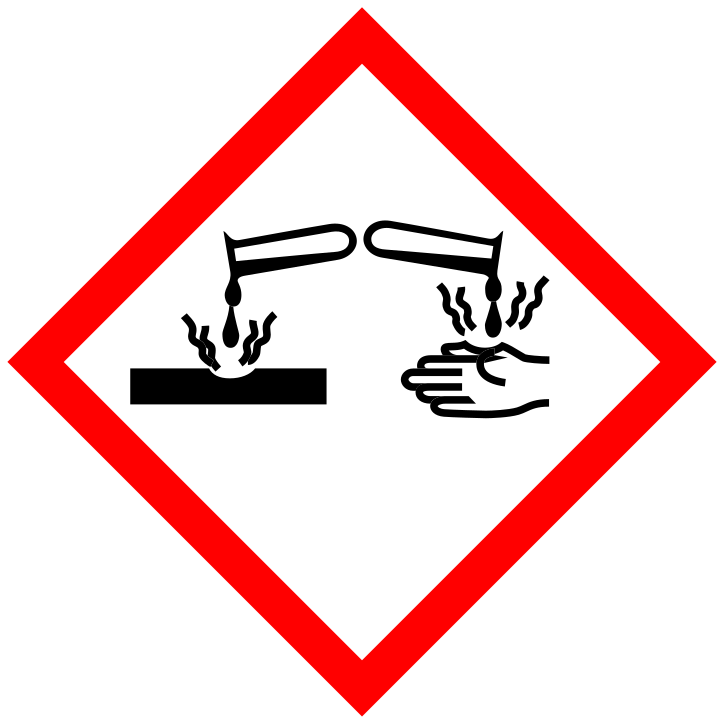 Corrosion (GHS05): stands for severe skin burns or serious eye damage, among other things, and is typical of many hardeners (H314: Causes severe skin burns and eye damage). The signal word is “Danger.” For you, this means: protect your skin and eyes with extra care.
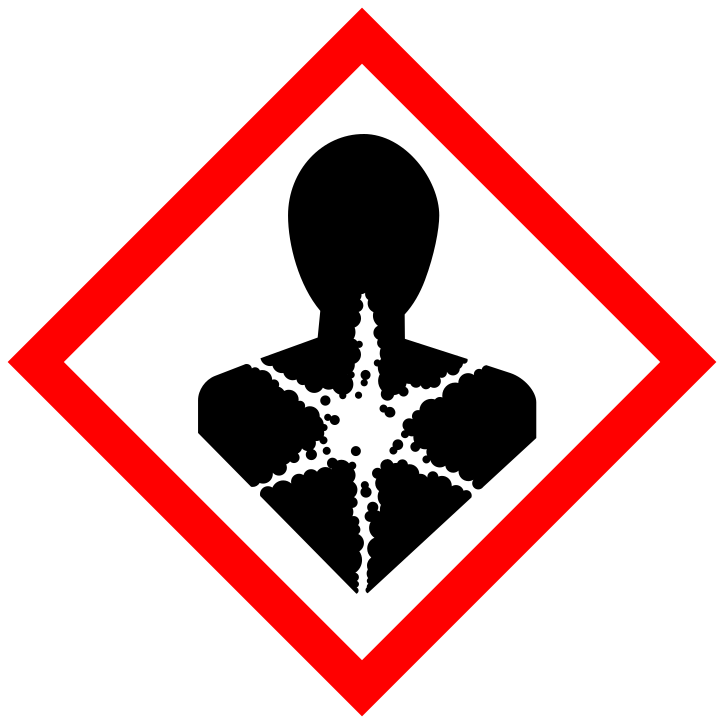 Health Hazard (GHS08): stands for respiratory sensitization (H334: May cause allergy or asthma symptoms or breathing difficulties if inhaled) and other long-term health hazards, among other things. For you, this means: protect your airways.
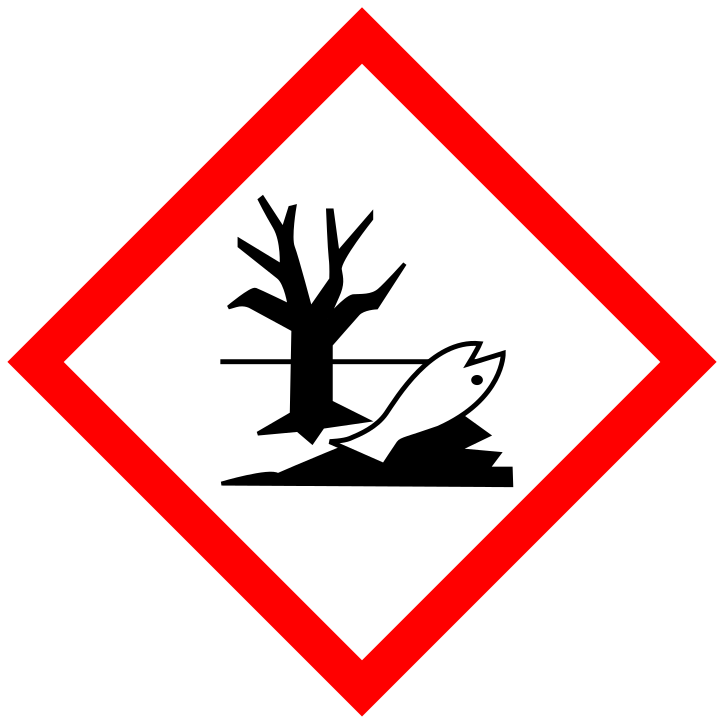 Environment (GHS09): stands for hazards to the aquatic environment, for example H411: Toxic to aquatic life with long lasting effects.
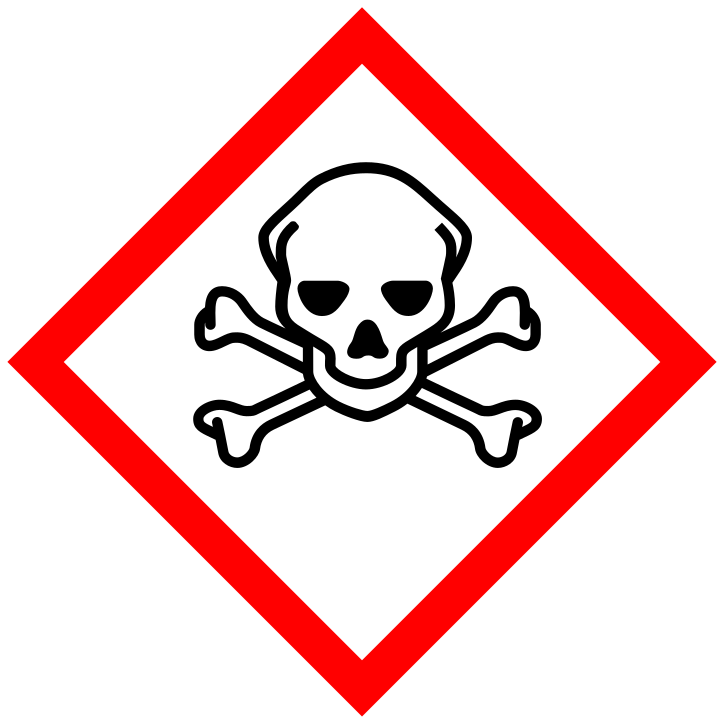 Skull and Crossbones (GHS06): stands only for acute toxicity in categories 1 to 3. You usually won’t find it on common epoxy resin systems.
Where do you find these symbols? On the container label and in section 2 of the safety data sheet, “Hazards identification.” Check the epoxy resin and the hardener separately, because the two components can be classified differently.
If there’s no symbol at all, that’s no all-clear. According to Safe Resin Art, platforms like Amazon, Temu, and AliExpress also carry epoxy resin products that don’t meet EU safety standards. Safety data sheets there are sometimes incomplete, and legally required warning labels are often missing entirely.
Is liquid epoxy resin toxic?
In liquid form, epoxy resin is a problem mainly for your skin. Many components of the epoxy resin and hardener can sensitize your skin and be absorbed through it, and some hardeners are also corrosive. Your product’s safety data sheet tells you what it contains.
Safe Resin Art counts epoxy resin among the cumulative allergens. It doesn’t take much to trigger an allergy. Sometimes a single unprotected contact is enough. So a small project is no reason to skip protection. So-called “epoxy rash” is a recognized occupational disease in Germany (with the BG BAU). The sensitization behind it is lifelong, even after the rash heals.
The entry “Which gloves protect you from epoxy resin?” explains which gloves protect you.
Is epoxy resin toxic while curing?
As soon as epoxy resin and hardener meet, a chemical reaction begins: the material heats up and gives off fumes. Epoxy resin cures through this reaction, not by drying. A full cure takes days, not hours.
Safe Resin Art describes curing in five stages. For fumes, the first three matter most:
Liquid stage: The freshly mixed epoxy resin is still completely liquid, and you can pour it and spread it. Fumes are at their peak. A respirator, protective gloves, and good ventilation are especially important.
Gel stage: The resin becomes as thick as honey but isn’t solid yet. There are still a lot of fumes, so keep full protection on.
Tacky stage: The material is partly solid, but the surface is still sticky. It’s still actively reacting and still releasing fumes. Keep your gloves and respirator on.
Even after that, your piece isn’t finished. Safe Resin Art describes lab tests in which, depending on the epoxy resin, samples reach their final Shore hardness only after 7 to 30 days. Chemical processes continue inside the material throughout this time.
So keep a freshly poured piece out of living rooms and bedrooms for at least a week, even if it already feels solid. During this time, it keeps releasing fine substances and vapors that can irritate your skin or airways. Let it cure in a ventilated place.
What happens if you breathe in epoxy resin fumes?
The fumes are often invisible. Depending on the system, volatile components can get into the air, and they can irritate and sensitize your eyes, nose, and airways. If you work without protection, you risk gradual sensitization, which often goes unnoticed until it’s too late.
Does it no longer smell? That doesn’t mean it’s safe yet. The smell is often gone after one or two hours, but the substances stay active much longer.
That’s why a respirator, gloves, and good ventilation belong to all three stages. Fumes peak right after mixing, while the epoxy resin is still liquid. In the gel stage, there are still a lot of fumes, and in the tacky stage, the material keeps reacting and giving off fumes. The entry “Which respirator for epoxy resin?” explains which respirator fits.
Is cured epoxy resin still toxic?
Correctly mixed and fully cured, epoxy resin is considered chemically stable. The real question is when it reaches that state.
Epoxy resin is never 100% cured right away. What feels “done” is often just the point where the piece feels hard and stable. At room temperature, many epoxy resins reach full strength in about a week; some take several weeks. Your product’s technical data sheet (TDS) tells you how long yours takes.
Hardness or a lack of smell alone doesn’t prove a full cure. There’s no fixed day after which every piece is safe. That’s no reason to panic, but it is a reason to do it right. If the surface stays tacky or soft even though you mixed correctly, the material isn’t fully cured. Uncured epoxy resin can still irritate or sensitize your skin.
Is epoxy resin toxic to children?
Epoxy resin doesn’t belong in children’s hands, or in the craft drawer next to markers and glue sticks. Children are especially sensitive to chemical substances: their skin is more permeable, their airways are more sensitive, and their immune system isn’t fully developed yet. Even the smallest residues or fumes can lead to skin irritation, allergies, or breathing problems.
Toddlers are at particular risk because they might touch or swallow unfamiliar substances. Working with epoxy resin has no place in a child’s room, under any circumstances. Storing the components there is also highly risky.
Is epoxy resin toxic to cats, dogs, and other pets?
Liquid epoxy resin and hardener can harm pets, too, for example if they leave paw prints in a fresh pour or lick contaminated surfaces. That’s why your workspace should be lockable or clearly off-limits, especially to children and animals.
Keep pets out of the curing area, too, as long as the material is still giving off fumes. Store epoxy resin, hardener, and waste in a lockable cabinet so animals can’t knock anything over.
Is epoxy resin food safe?
Not across the board. In the EU, anything that comes into contact with food must not release substances in amounts that harm your health. A “food safe” claim covers only the conditions tested, for example brief contact with cold, dry food. In the US, the FDA doesn’t approve individual craft epoxy resins, and “FDA compliant” is the maker’s own claim.
The piece must be fully cured, the top coat must not contain any additives, and the epoxy resin should be REACH-compliant and free of CMR substances. Only offer a piece for food contact if your documentation covers the finished piece, its materials, and its curing. A statement about the epoxy resin alone isn’t enough. In 2025, the EU also restricted bisphenol A (BPA) in food-contact materials, including coatings, with transitional rules (Regulation (EU) 2024/3190).
Natalie’s recommendation for cutting boards, serving boards, and trays: no hot, fatty, or acidic foods, and no dishwasher.
You'll find all the basics on this topic in detail in the book Safe Resin Art. Safe Resin Art is now available as an e-book, on Kindle and through Gumroad.
Frequently asked questions
Is epoxy resin still toxic after it cures?
Correctly mixed and fully cured, epoxy resin is considered chemically stable. But depending on the product, it's only fully cured after about a week to several weeks. Hardness or a lack of smell doesn't prove it; your technical data sheet (TDS) is what counts.
How long should a freshly poured epoxy resin piece stay out of your home?
Keep it out of living rooms and bedrooms for at least a week, even if it already feels solid. During this time, it keeps releasing fine substances and vapors that can irritate your skin or airways.
Why is there no skull and crossbones on my epoxy resin?
Because the Skull and Crossbones (GHS06) stands only for acute toxicity in categories 1 to 3. Common epoxy resin systems are usually classified differently, for example with the Exclamation Mark and, on many hardeners, the Corrosion symbol. That doesn't make them harmless, and what counts is still your product's label.
Can epoxy resin cause cancer?
According to the European Chemicals Agency (ECHA), the usual building blocks of epoxy resin are not classified as carcinogenic, but they are classified as skin sensitizers. Your safety data sheet tells you whether your product contains substances that are carcinogenic, mutagenic, or toxic to reproduction, known as CMR substances. Be careful with additives: some azo dyes in powder pigments can convert into aromatic amines in the body, and casting powders with quartz can contain respirable quartz dust.
Can children craft with epoxy resin?
No. Epoxy resin doesn't belong in children's hands, and storing it in a child's room is highly risky, too. Children react more strongly to chemical substances because their skin is more permeable, their airways are more sensitive, and their immune system isn't fully developed yet.